Google recently found itself in hot water after posting a viral AI-generated recipe on X that looked suspiciously like a dish straight from a popular food blog. The company shared a colorful infographic featuring a stuffing recipe that was nearly identical to one from the HowSweetEats blog. Nate Hake, a keen-eyed observer, did the math and pointed out that the ingredient lists matched word-for-word. Yes, you read that right—an AI had transformed a scraped recipe into an adorable card format, but forgot one tiny detail: giving credit to the original creator.
Google faced backlash after sharing an AI-generated recipe that mirrored a popular food blog without crediting the original creator.
As the backlash exploded on X, people were quick to call out Google for its blatant lack of attribution. Seriously, how hard is it to link back to the source? Hake accused the tech giant of republishing content verbatim, which is a big no-no if you’re trying to play by the rules. Critics didn’t hold back; they labeled the AI-generated output as “AI slop” that steals from human creators. In a world where originality should be celebrated, Google’s actions felt like a slap in the face.
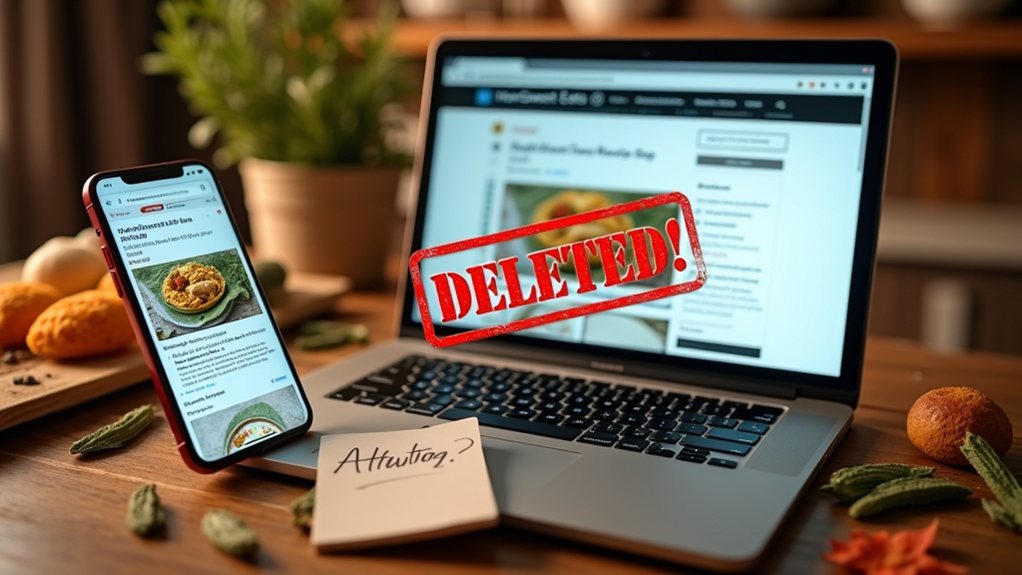
And what did Google do in response to the uproar? They quietly deleted the NotebookLM post, no fanfare, no public statement. Just poof! Gone. It was eerily reminiscent of Microsoft pulling an ad for its Copilot feature after it fell flat. The deletion happened on December 1, 2025, after the post had already gone viral, leaving many to wonder if they were covering their tracks rather than owning up to their mistakes.
This incident is just a snapshot of a broader issue in the world of AI. With the Gemini 3 model churning out interactive graphics and rewriting recipes, many food bloggers are feeling the pinch. Reports show that creators are experiencing staggering traffic drops, with some losing as much as 80% of their Google traffic. That’s a death knell for independent creators trying to make a living. Google’s AI model has been criticized for violating website terms of use by republishing content without proper attribution. Furthermore, the rise of AI-generated content has made it harder for vetted recipes to gain visibility.
Meanwhile, AI-generated recipes are often riddled with errors, mixing up baking times and temperatures like it’s no big deal. In the end, this whole fiasco raises a ton of questions about the future of creativity in the age of AI. When AI-generated slop floods the internet, who’s left to trust? The backlash over Google’s viral recipe might just be the tip of the iceberg, and food bloggers are bracing for impact.